What Are the Best Budget Hotels Near Los Angeles International Airport (LAX)?
Crowne Plaza Los Angeles International Airport is a four-star hotel at an affordable price, which makes it an excellent selection for budget-conscious travelers. You're also steps from both the airport and the ocean at this convenient location. Amenities include a rooftop pool, a free shuttle to the airport, a sushi bar, a taproom with craft beer, and a fitness center. Each guest room includes an ergonomic workspace, free Wi-Fi, 37-inch HDTVs, refrigerators, premium bedding, and an aromatherapy kit. Upgrade to the executive level to access a private lounge, free continental breakfast, and a complimentary weekday evening reception.
Los Angeles Airport Marriott is another low-price four-star lodging option right at the airport. In addition to a free shuttle, amenities at this property include a resort pool, gourmet on-site restaurants, and a 24-hour gym. Each spacious room features upgraded bedding, high-speed internet access, mini fridges, and generously sized work stations. Upgrade to a suite for more space or choose an M club room for access to a private lounge and complimentary breakfast.
Custom Hotel Los Angeles Airport is an affordable 3.5-star hotel close to both the airport and Loyola Marymount University. You'll enjoy an outdoor pool with free private cabanas and a poolside bar at this boutique property less than a mile from the beach. Enjoy food and drink at the sophisticated Deck 33 restaurant, which features an outdoor fire pit. Other amenities include updated guest rooms with premium linens, flat-screen TVs, wireless internet, and operational windows. Some rooms even have dazzling rooftop views of the city and the ocean.
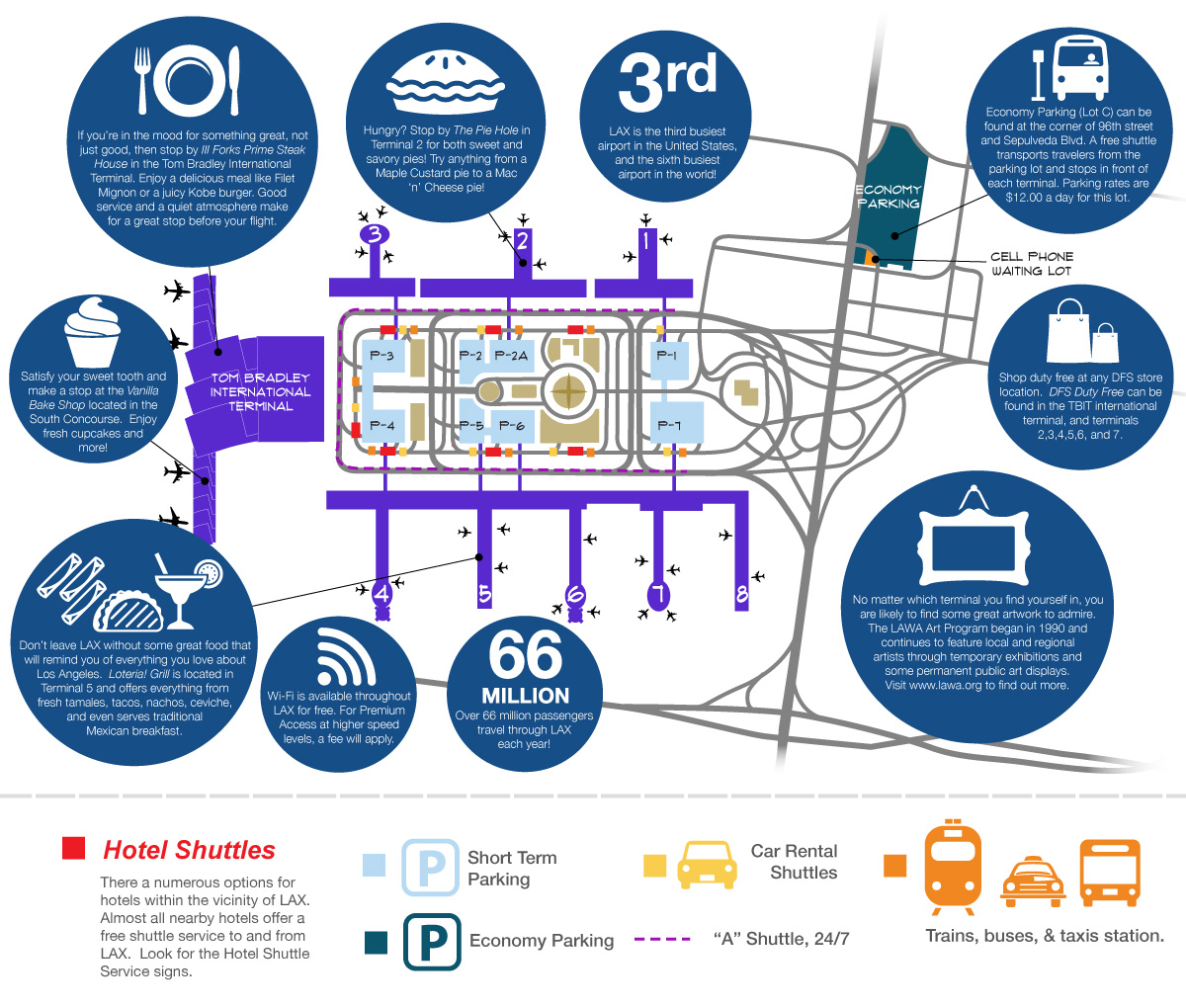
Detailed Map of LAX Airport
What Are the Best Luxury Hotels Near Los Angeles International Airport (LAX)?
You can enjoy a five-star experience less than six miles from LAX when you stay at the Fairmont Miramar Hotel & Bungalows in Santa Monica. This beachfront resort spans five acres of real estate with breathtaking Pacific Ocean views. Amenities include both a barber shop and salon, high-end retail, a first-class health club with yoga and other training classes, concierge service, kids' activities, loaner bikes, and an on-site restaurant and lounge. Pets are welcome at this property. Choose from guest rooms, suites and secluded bungalows featuring private balconies, bathrobes, Keurig machines, flat-screen TVs, and high-speed internet.
Another great Santa Monica option with proximity to the airport and impressive five-star amenities is Casa Del Mar. Inspired by Mediterrean architecture, this property is the perfect place to enjoy dinner and drinks while taking in the sunset, whether you prefer to dine at the raw bar or choose gourmet Italian fare. Rooms come with 42-inch flatscreen TVs, Bluetooth speaker systems, Italian marble bathrooms with massage tubs, Keurig coffee, and complimentary shuttle service. Take surfing lessons, work out at the fitness center, and enjoy wellness services in the award-winning spa.
The Ritz Carlton Marina Del Rey is a five-star hotel less than 5 miles from the airport near Venice Beach. This stunning property offers an award-winning spa that focuses on essential oils and wellness treatments, waterfront dining on local gourmet cuisine at Cast & Plow, an outdoor pool with dining and private cabanas, and newly-renovated, pet-friendly rooms and suites. Guest accommodations are appointed with plush robes, luxury bath products, a private balcony, a laptop safe, 49-inch flat-screen TV, iPod charging station, complimentary coffee and tea, and 24-hour in-room dining.
Where Will I Find the Best Hotel Discounts Near Los Angeles International Airport (LAX)?
Embassy Suites Los Angeles Intl Airport South is a 3.5-star Hilton property with special prices for seniors, AARP members, AAA members, military members, and government employees. Less than a mile from the airport, this all-suite hotel features a free airport shuttle, lush gardens, a classic American bistro, a complimentary evening reception with snacks and drinks, a 24-hour business center, a fitness center, and an indoor pool. Every room is appointed with internet access, work table, cable TV, mini fridge, and microwave, with some rooms also offering Wi-Fi, a coffee maker, and a Bluetooth docking station. These accommodations are also pet-friendly.
Courtyard Los Angeles Lax / Century Boulevard is a 3-star airport hotel with discounts for AAA members, CAA members, military members, senior citizens, and government employees. This property features modern rooms, an onsite restaurant, Starbucks Coffee, a fitness center, on-site laundry, and a concierge service. Each room features plush bedding, its own workspace, free high-speed internet, coffee and tea maker, cable TV with HBO, a wet bar, a mini fridge, and a whirlpool tub.
Travelodge by Wyndham LAX South is a 2-star property with special rates for AAA members, CAA members, AARP members, government employees, seniors, members of the military, and veterans. This property boasts an outdoor pool, free parking, free Wi-Fi, a free airport shuttle, and an on-site business center as well as laundry facilities. Each room features a tea and coffee maker as well as a flat-screen TV.
What Are the Best Value Hotels Near Los Angeles International Airport (LAX)?
Hyatt Regency Los Angeles International Airport is a four-star hotel less than a mile from the airport. Just jump on the free shuttle or take a short walk to from the terminal to this outstanding property. Enjoy Asian Latin fusion cuisine inspired by the city's diversity at unity la restaurant on site. This hotel also features spacious mid-century modern rooms and suites, concierge service, laundry facilities, a heated outdoor pool, valet parking, 24-hour fitness center and business center, room service, and free Wi-Fi. Each room has a 55-inch HDTV, hair dryer, coffee maker, and refrigerator.
Sheraton Gateway Los Angeles Hotel is an affordable four-star airport hotel in proximity to the entertainment district. This property offers exceptional value thanks to perks like a free airport shuttle, an updated fitness center, an outdoor pool with private cabanas, and several on-site dining options serving California farm to table cuisine. Each guest room has signature Sheraton bedding, a marble bathroom, Sheraton signature bedding, free Wi-Fi, and several USB ports to keep all your devices charged and ready to go.
Hampton Inn & Suites LAX El Segundo is a conveniently located 2.5-star hotel near both the airport and Toyota Sports Center. This property features a free 24-hour airport shuttle, free hot breakfast, free Wi-Fi, an indoor pool, a fitness center, and a business center. Each room features a mini fridge, 42-inch HDTV, and a coffee maker. Enjoy your stay in the Los Angeles area while remaining in budget.
As the largest airport in the western United States, Los Angeles International Airport, or LAX as it is commonly known, provides a gateway for cargo and passenger services to Asia, Oceana, and North America. LAX is one of 5 airports (albeit the largest) that services the Los Angeles area. A large variety of hotels, shuttles, and other passenger services support the airport. Getting to and from the airport is simple by rail, or by freeway. And whether you fly in on business or plan to spend some time in vacation mode, the airport is in close proximity to many LAX hotels and not far from the busy downtown district.Why travelers visit Los Angeles: Hollywood, the beaches, universities, Orange County, Disneyland, Knott's Berry Farm, and of course, the Dodgers, Lakers, Kings/Clippers, and the Rams!
About Los Angeles International Airport
Los Angeles International Airport is one of the busiest airports in the world, serving about 60 million passengers each year. In fact, it's the go-to hub for more than two-thirds of all visitors traveling to Southern California. It's made up of nine terminals, each built in a different era with its own unique architectural style. It's an expansive site, and walking from one terminal to the next can take more than 10 minutes. Those who prefer not to walk can take advantage of the free shuttle bus that makes a circle around the facility. Keep in mind that this airport is generally quite crowded at all times of the day, so visitors should leave ample time for flight check-in.After arriving in the City of Angels, guests can head over to Los Angeles International Airport hotels to unpack for the stay and unwind before exploring the city. For example, the Holiday Inn and Crowne Plaza are only a short walk from the hub. Another great option is Candlewood Suites, which has been renowned by past guests for its friendly staff and wide array of amenities - you'll benefit from the barbecue area, fitness center, free high-speed Internet and business services available here.
Los Angeles
Los Angeles is a massive city laid out on 467 square miles laid out along the Pacific Ocean. Its natural scenery is one of its biggest draws - the bustling metropolis is enveloped by lush valleys and forests, pristine beaches, mountain ranges and the expansive Mojave Desert. It's made up of several counties, including Orange, San Bernardino and the city's namesake county, as well as a handful of districts. The Hollywood district is the beating heart of the destination, where you'll find historic studios, the sets of famous movies and plenty of movie stars. The downtown central business district is also a nightlife-lover's playground, containing the Grand Avenue cultural corridor, ritzy restaurants, chic bars and trendy entertainment venues.The Los Angeles metro area is among the most populous in the country, with more than 17 million residents, and visitors can become overwhelmed by the large crowds and fast-pace character of the metropolis. But it's a very diverse city that's welcoming to people of all lifestyles, and the thriving tourism industry makes it an amiable destination for visitors. Travelers should keep in mind that public transportation is generally not an option for getting to many places in Los Angeles - the bus and rail system is largely considered inadequate, and most use cars to get around.
Things to Do in Los Angeles
Guests at Los Angeles International Airport hotels have a wide variety of cultural and historical attractions at their fingertips. Visitors may want to start their tour of the City of Angels by hitting the top sites, such as the Walt Disney Concert Hall, Venice Boardwalk and the Getty Center. Fine art fans will enjoy a trip to the Los Angeles County Museum of Art, which contains an impressive collection of works that span several centuries. You'll come across everything from ancient Chinese ceramics to paintings by Rembrandt, Magritte, Cezanne and other masters.Hollywood is also a highlight of many tourists' travel itineraries. Take a stroll along the Hollywood Walk of Fame, catch a show at Grauman's Chinese Theater and visit the tombstones of some of the industry's biggest stars at the Hollywood Forever Cemetery. Be sure to stop by the Hollywood Museum to discover old artifacts from the cinema history - it contains vintage posters, intriguing props and even the original jail cell of Hannibal Lecter.
FAQs about hotels near Los Angeles International Airport (LAX)
How much does a cheap hotel near Los Angeles International Airport (LAX) cost per night?
In the last year, a 2 star hotel near Los Angeles International Airport (LAX) can be as cheap as $102.02 per night. (based on HotelPlanner prices)
How much does a 3 star hotel near Los Angeles International Airport (LAX) cost per night?
In the last year, the average 3 star hotel near Los Angeles International Airport (LAX) has been $158.85 per night. (based on HotelPlanner prices)
How much does a luxury hotel near Los Angeles International Airport (LAX) cost?
In the last year, the average 4 star hotel near Los Angeles International Airport (LAX) has been $185.92 per night. (based on HotelPlanner prices)